Odour Source Investigations
Finding the cause of unexplained smells in buildings
A persistent smell in a property is one of the hardest building defects to pin down. It may come and go, be stronger in one room, or appear only in certain weather. Often nobody can say what it is, let alone where it is coming from.
Trace Surveys investigates odour problems in houses, flats, apartment blocks, offices and commercial buildings across London and the South East. We identify the likely source, show how the smell is travelling through the building, and set out what needs to be done to stop it.
Smells we are asked to investigate
- Sewer, drain or rotten egg smells: defective drainage, dry traps, failed seals and sewer gas escaping into the building
- Musty, damp or stale smells: hidden moisture, mould growth, trapped water and damp in structural voids
- Smoke, cigarette, cannabis or cooking smells from neighbours: air leakage between flats or units
- Chemical, solvent, sweet or plastic smells: off-gassing from construction materials, finishes, adhesives and furnishings
- Exhaust fumes, burnt oil or tar smells: combustion by-products from flues, chimneys, car parks and plant
- Bin store, kitchen extract and grease smells: odours migrating from commercial or neighbouring premises
- Decaying or ammonia-like smells: organic decay or pest activity in voids
- Fishy or burning smells: often linked to overheating electrical components, which should be checked promptly
How we investigate
1. Odour source assessment
Not every odour can be named before we start. We look at the character of the smell and the pattern of when and where it occurs. This narrows the problem to a range of likely sources that can be tested.
2. Air sampling and VOC testing
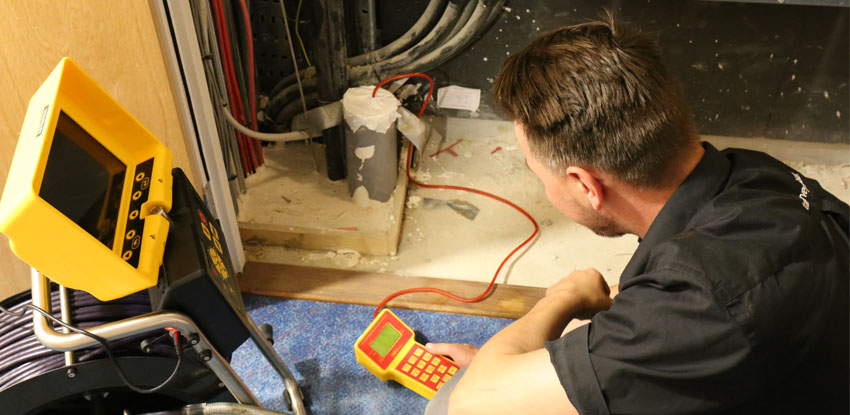
We sample the indoor air for volatile organic compounds (VOCs) that could be contributing to the smell described, helping to separate material off-gassing from drainage, combustion or biological sources.
3. Environmental monitoring
We monitor conditions inside and outside the building and compare odour occurrences with temperature, humidity, wind and air pressure. Smells that appear only in certain weather usually have a specific cause this can reveal.
4. Identifying odour-emitting materials
Where a material is the source, we locate it so it can be sealed, treated or removed.
5. Pressure testing to trigger the odour
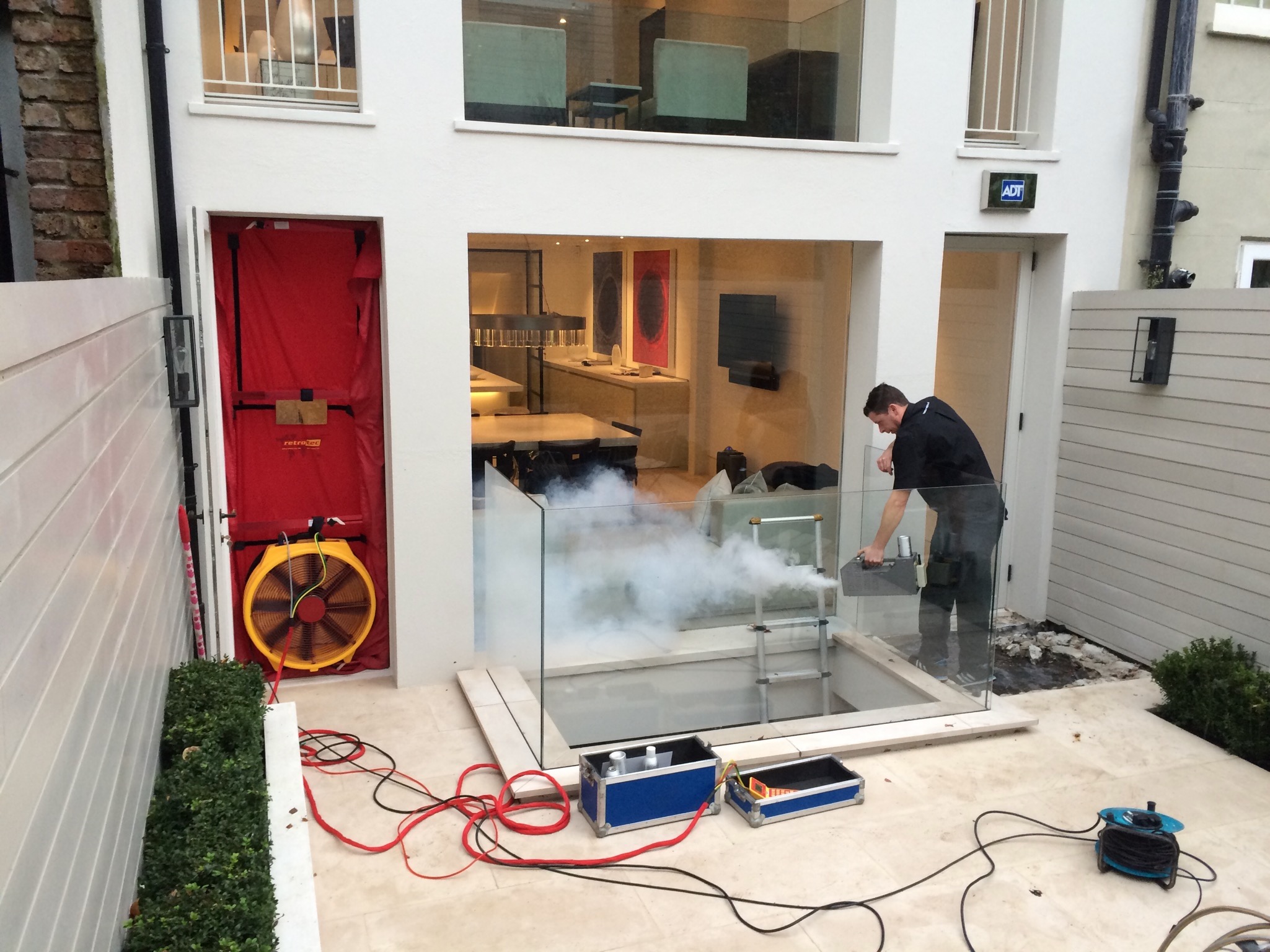
Intermittent smells are difficult to catch. By changing the air pressure in the building we can draw the odour out on demand, making the entry point far easier to find.
6. Airflow and pressure differential measurement
We measure pressure differences through the building to understand how air moves from one area to another, and so how an odour reaches the room where it is noticed.

7. Smoke and tracer gas testing
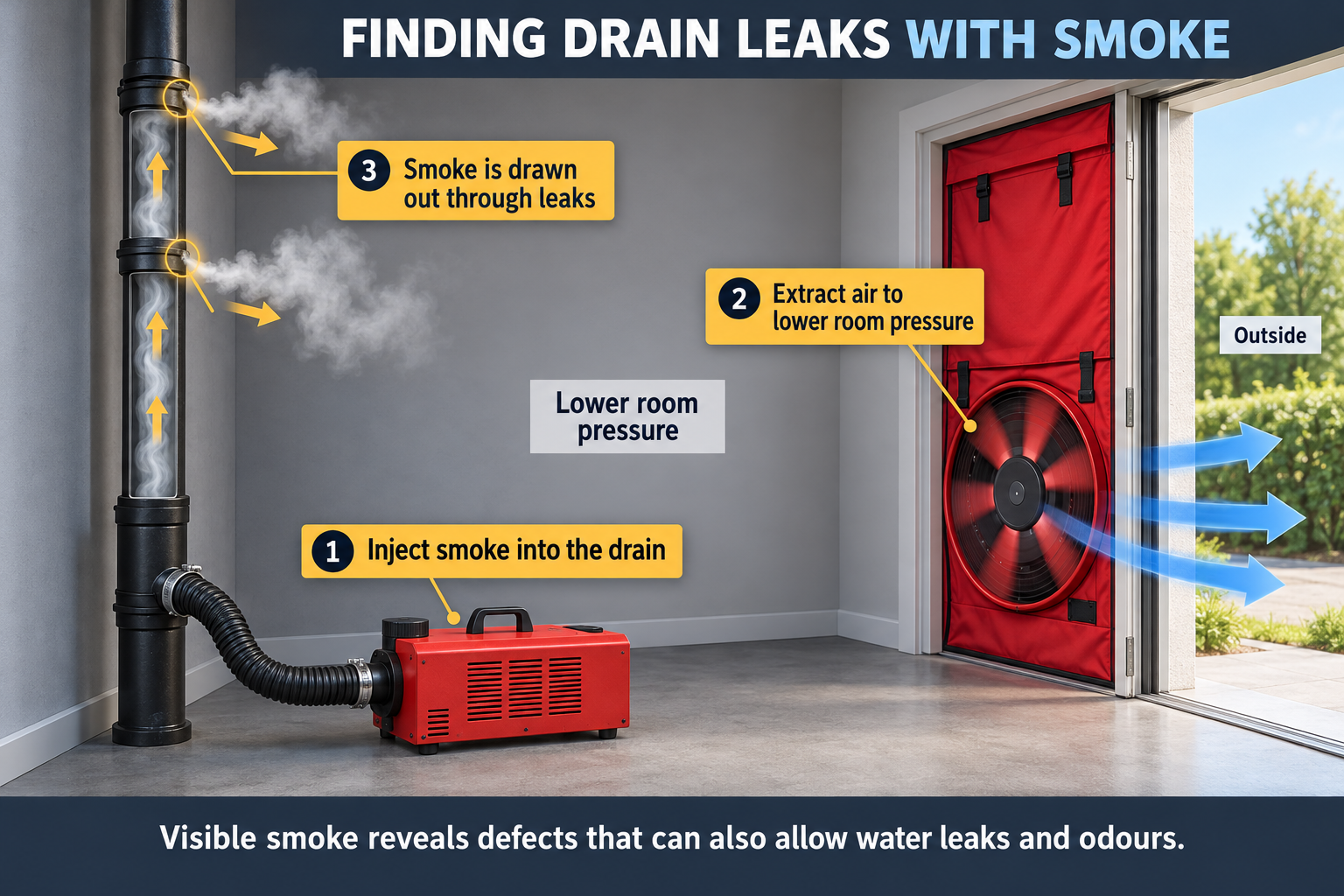
For cooking, sewer, smoking and bin store odours, we carry out pressurised smoke or tracer gas testing to prove the air leakage paths between units, risers, voids and drainage. Once proven, these paths can be sealed to limit odour transfer between properties.
What you receive
A clear report setting out what we tested, what we found, the most likely source and route of the odour, and practical recommendations for remedial work. Our findings are independent, as we do not carry out the repairs ourselves.
Who we work with
Homeowners, landlords, tenants, managing agents, housing associations, facilities managers, developers and contractors, including where an odour is the subject of a complaint or dispute between neighbours or between landlord and tenant.
Have a smell you can’t trace? Tell us what it smells like, where you notice it and when it occurs, and we will advise on the best approach.