Detección de fugas en fachadas
Hay muchos tipos diferentes de fachadas de edificios con los que nos encontramos. Trace Surveys dispone de una gama inigualable de diferentes sistemas para detectar fugas a través de cualquier tipo de revestimiento. A continuación se ofrece un resumen de las técnicas más comunes que utilizamos.

Termografía para la detección de fugas y defectos
La termografía nos permite medir y ver la radiación térmica emitida por las superficies de los edificios. Si un defecto influye en la cantidad de energía térmica retenida en el interior de un elemento del edificio, ello repercutirá en la velocidad a la que dicho elemento emite radiación térmica. Por ejemplo, el agua atrapada en el interior de una fachada puede provocar un enfriamiento por evaporación. Esto enfriará los elementos afectados y aparecerán más fríos en una imagen térmica. La siguiente imagen infrarroja muestra un bloque de pisos de 6 plantas en el que el agua afectaba a las dos plantas inferiores. By assessing the temperature differentials, we were able to see that the cooling started at roof level so we were able to start looking for a fault at roof level. This fault was identified as a hole in the roof membrane.
Pruebas de barras pulverizadoras y mangueras
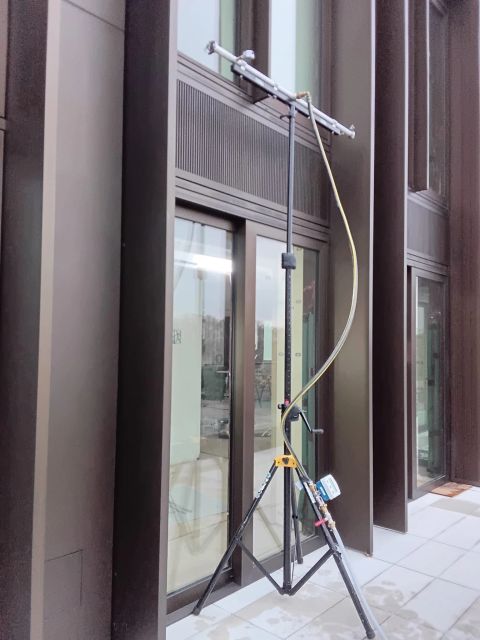
Trace Surveys use this testing for construction phase compliance testing and post construction leak investigations. We carry out testing as per the European Standard BS EN 13051: 2001 and NHBC Standards 2011 Chapter 6.9 S12. We can also test in accordance with ASTM International Standards. These tests involve applying water against a façade at a controlled rate. In addition to the standard spray testing we are able to depressurise the internal rooms using specialist fans. This allows us to encourage air flow through the façade which simulates a strong head wind.
Pruebas de humo o gas
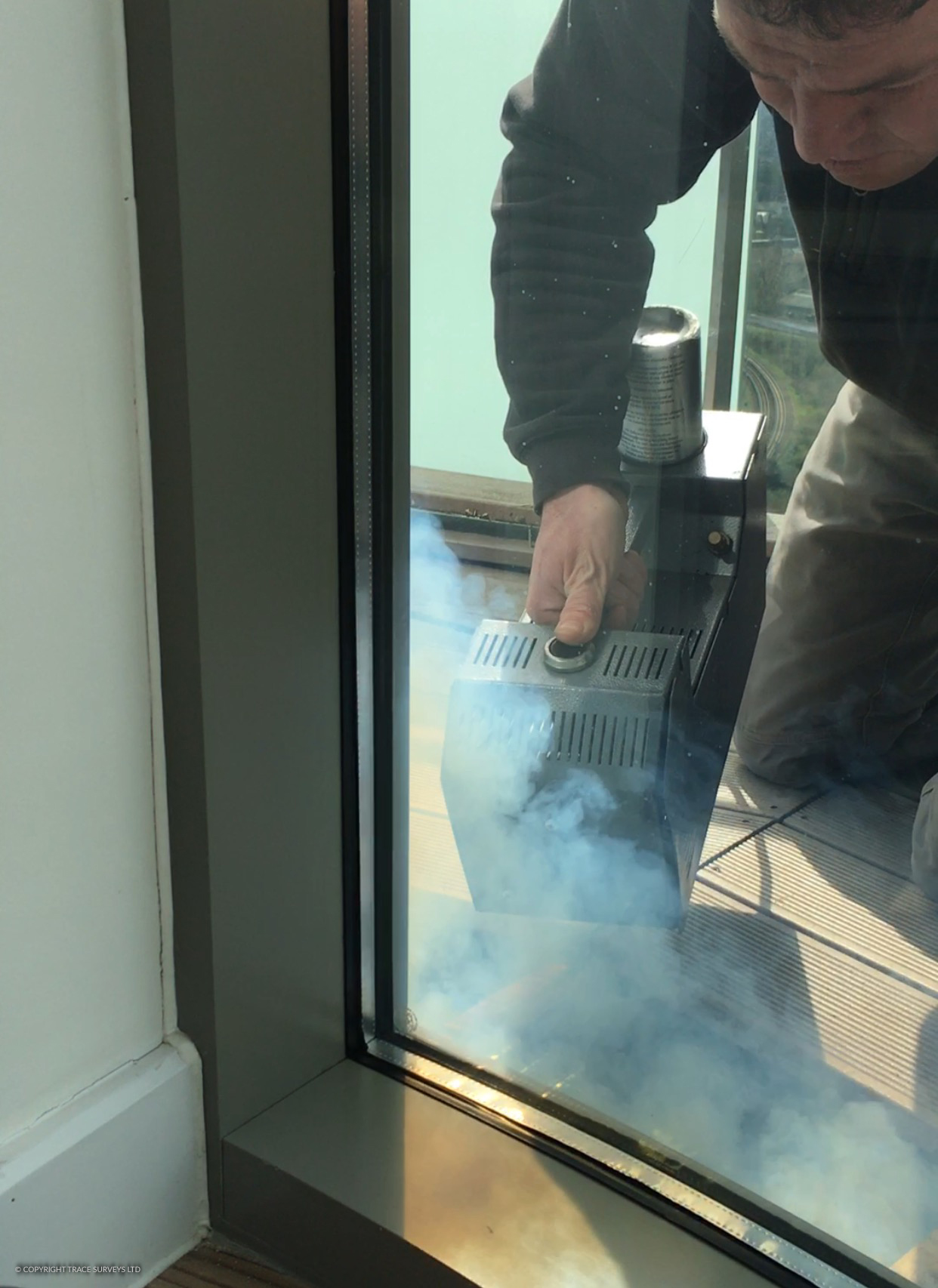
Generalmente utilizamos pruebas de humo o gas para identificar las vías de fuga de aire en los cerramientos de los edificios. Cuando se utiliza humo o gas, es fundamental controlar la dirección del flujo de aire a través del revestimiento. Para ello se utiliza un ventilador de puerta para presurizar o despresurizar la zona por la que entra el agua. El siguiente vídeo muestra un ejemplo básico del funcionamiento de la prueba.
Detección de fugas por ultrasonidos
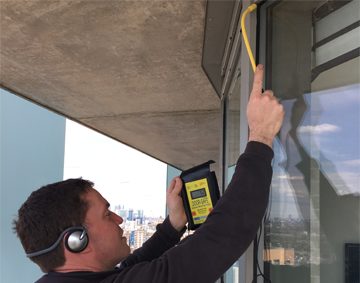
Ultrasound is used to test for leaks on things like aeroplanes, submarines, luxury cars and even high speed trains. Trace Surveys use it to test sealed cladding systems such as curtain walls and glazing systems. Ultrasound passed through minute air gaps but is largely stopped by any solid element of the cladding. By generating ultrasound on one side of the cladding system, we can detect the exact points where the ultrasonic waves are leaking through the seals and joints. We can use this method to carry out construction phase integrity testing or for leak detection surveys on installed systems.